الطبق المتوازن: 7 عادات يومية | The Balanced Plate: 7 Everyday Habits
دليل الطبق المتوازن: سبع عادات غذائية سهلة للحياة اليومية
لا يحتاج تحسين الطعام إلى قائمة طويلة من الممنوعات أو إلى تغيير كل ما اعتدنا عليه في يوم واحد. غالباً ما يبدأ الأمر بخطوات صغيرة تتكرر: إضافة خضار إلى وجبة مألوفة، أو التخطيط لوجبة قبل أن يشتد الجوع، أو اختيار مشروب أقل حلاوة. في هذا الدليل نتناول عادات عملية تساعد على بناء وجبات متوازنة ومشبعة، مع مراعاة اختلاف الأذواق والميزانيات والروتين اليومي. الفكرة ليست الوصول إلى طبق مثالي في كل مرة، بل جعل الخيارات المغذية أسهل وأكثر حضوراً خلال الأسبوع، مع مساحة مرنة للأطعمة التي نحبها.
قد يكون يوم العمل مزدحماً، وقد تختلف مواعيد الوجبات بين المنزل والمكتب أو أثناء التنقل. لذلك سنركز على قرارات قابلة للتطبيق باستخدام أطعمة متاحة، لا على وصفة واحدة أو خطة صارمة. يمكن تكييف كل اقتراح مع الأطباق المحلية، ومع تفضيلات الأسرة، ومع ما يتوفر في المتجر. ابدأ بعادة واحدة تناسبك، وكررها حتى تصبح مألوفة، ثم أضف عادة أخرى عندما تشعر أن ذلك مناسب.

1. استخدم الطبق كدليل مرن، لا كقاعدة جامدة
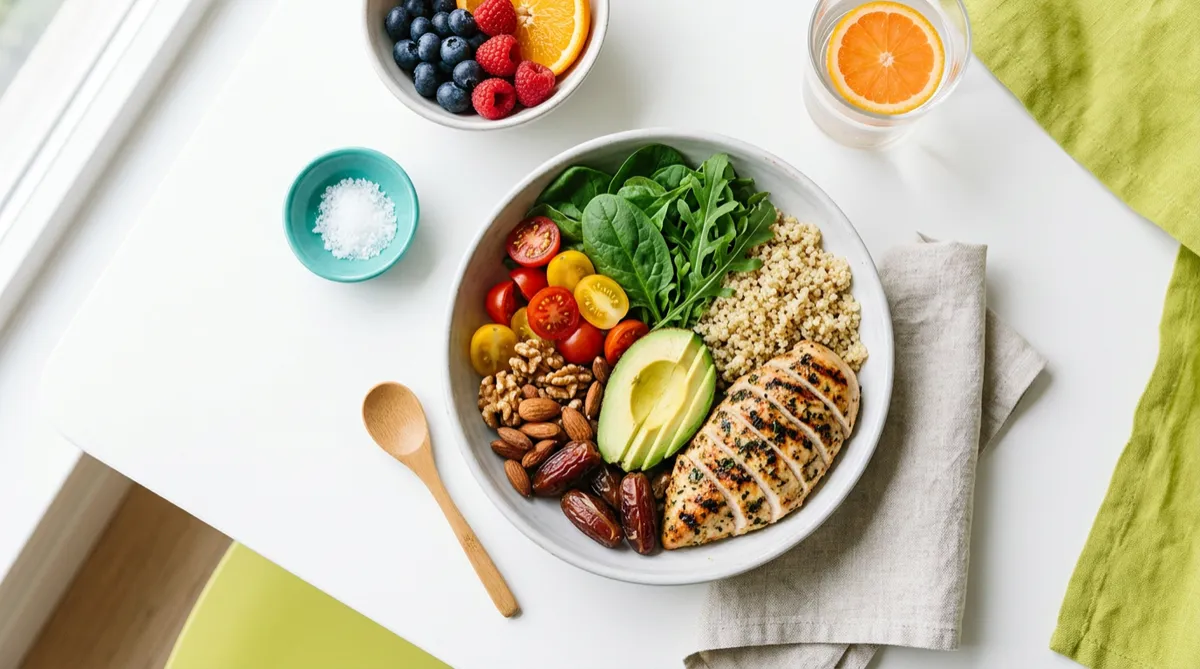
عند إعداد وجبة رئيسية، تخيل أن الخضروات تشغل مساحة كبيرة من الطبق، وأن هناك مصدراً للبروتين، ومصدراً للحبوب أو النشويات، مع إضافة كمية مناسبة من الدهون المستخدمة في الطهي أو التتبيل. لا يلزم قياس كل مكوّن أو الالتزام بتقسيم دقيق؛ هذا التصور يساعد فقط على ملاحظة التنوع. يمكن أن تكون الخضروات سلطة، أو خضاراً مطهوة، أو شوربة غنية بالخضار، ويمكن أن تتغير المكونات حسب الموسم وما تحبه الأسرة.
في وجبة عربية مألوفة، قد يجتمع الأرز مع الدجاج والسلطة، أو الخبز مع الحمص والخضار والبيض. جرّب زيادة الخضار أو إضافة سلطة جانبية، ثم انتبه إلى ما يجعلك تشعر بالرضا بعد الطعام. إذا كان طبقك يتكون غالباً من صنف واحد، فإضافة مكوّن آخر تدريجياً طريقة عملية لزيادة التنوع من دون إلغاء ما تحبه. تذكّر أن التوازن يُفهم عبر نمط الوجبات خلال اليوم والأسبوع، وليس من طبق منفرد.
2. اجعل الألياف ضيفاً يومياً في أكثر من وجبة
توجد الألياف في الخضروات والفواكه والبقول والحبوب الكاملة والمكسرات والبذور. إدخال أكثر من مصدر خلال اليوم يجعل الوجبات أكثر تنوعاً، وقد يساعد على الإحساس بالشبع. ابدأ بخيار يسهل عليك تكراره: ثمرة فاكهة مع الإفطار، أو خضار مقطعة بجانب الغداء، أو عدس وفاصولياء في طبق تحبه. لا تحتاج إلى شراء منتجات خاصة؛ اختيار حبوب أقل معالجة أو إضافة البقول إلى وصفة معتادة يكفي ليكون تغييراً ملموساً.
إذا لم تكن معتاداً على تناول كثير من الألياف، فأضفها بالتدريج، واهتم بشرب السوائل الملائمة لك. الزيادة السريعة قد لا تكون مريحة لبعض الأشخاص، لذلك راقب ما يناسبك ولا تحول الفكرة إلى تحدٍّ قاسٍ. يمكن غسل الفاكهة مسبقاً وحفظها في مكان ظاهر، أو تجهيز الخضروات لوجبات اليوم التالي، أو استخدام البقول المعلبة بعد شطفها. هذه التفاصيل تقلل الجهد وقت الجوع وتجعل الخيار المغذي قريباً وسهل الوصول.
3. أضف مصدراً للبروتين يناسب ذوقك وميزانيتك
يساعد وجود مصدر بروتين في الوجبة على جعلها أكثر اكتمالاً، وتتنوع الخيارات بين البيض والدجاج والسمك واللحوم والبقول ومنتجات الألبان والمكسرات وغيرها. اختر ما يناسب تفضيلاتك وقدرتك على التحضير، ولا تفترض أن الوجبة المتوازنة تتطلب مكوّناً مكلفاً. الفاصولياء والعدس والحمص خيارات عملية في أطباق كثيرة، ويمكن مزجها بالخضار أو إضافتها إلى الشوربة أو السلطة. وفي الأيام المزدحمة، يساعد الاحتفاظ بمكوّن مطهو أو جاهز على تجنب الاعتماد على خيار واحد متكرر.
حاول توزيع الخيارات خلال الأسبوع بدلاً من تناول الصنف نفسه دائماً. يمكن إعداد كمية مناسبة من البيض أو البقول أو الدجاج مسبقاً ثم استخدامها في وجبات مختلفة، مع تغيير الخضار أو التوابل أو طريقة التقديم. هذا لا يعني أن عليك حساب كمية البروتين أو تتبع كل لقمة؛ المقصد هو التنويع وإضافة عنصر مشبع إلى الوجبة. إذا كانت لديك احتياجات خاصة أو قيود غذائية، فاطلب توجيهاً شخصياً بدلاً من تطبيق نصيحة عامة على حالتك.
4. اختر النشويات التي تمنحك تنوعاً واستمرارية
الأرز والخبز والبطاطس والشوفان والبرغل والذرة وغيرها يمكن أن تكون جزءاً من وجبات متوازنة. حين يتاح ذلك، جرّب بعض الخيارات الأقل معالجة أو الغنية بالحبوب الكاملة، مثل خبز الحبوب الكاملة أو الشوفان، من دون اعتبارها شرطاً للنجاح. المهم أن يكون اختيارك مناسباً لك، وأن يجتمع مع الخضار ومصدر للبروتين. تبديل النوع أو إضافة حبوب وبقول إلى الطبق يضيف اختلافاً في النكهة والقوام، وقد يجعل الوجبات أكثر إرضاءً.
تساعد المرونة على الاستمرار أكثر من وضع قواعد مطلقة. إذا كنت تفضل الأرز الأبيض أو الخبز المعتاد، يمكنك الاحتفاظ بهما وإضافة سلطة أو خضار مطهوة أو بروتين إلى الطبق. وإذا أردت تجربة بديل، ابدأ بخلط كمية صغيرة من خيار جديد مع ما اعتدت عليه. كذلك انتبه إلى طرق التحضير والإضافات، لأن الصلصات أو الإضافات قد تغير طعم الوجبة وطبيعتها. لا يوجد نوع واحد مناسب للجميع، ولا تلغي وجبة بعينها تقدمك نحو نمط أكثر توازناً.
5. خطط لوجبتين أو ثلاث قبل بداية الأسبوع
التخطيط البسيط لا يعني إعداد كل وجبات الأسبوع دفعة واحدة. اختر وجبتين أو ثلاثاً تعرف أنك ستحتاج إليهما في الأيام المزدحمة، وحدد مكوناتها الأساسية قبل التسوق. يمكن غسل الخضار، أو طهي كمية من البقول، أو تجهيز مصدر بروتين، أو تقطيع الفاكهة، مع حفظ كل شيء بطريقة آمنة ومناسبة. عندما تكون بعض المكونات جاهزة، يصبح من الأسهل تركيب وجبة سريعة بدلاً من البدء من الصفر في وقت لا يتوفر فيه الكثير من الوقت.
ضع قائمة قصيرة مبنية على الوجبات التي تحبها فعلاً. على سبيل المثال، قد تتضمن سلطة مع بروتين، وشوربة عدس، ووجبة أرز مع خضار، وفاكهة للوجبات الخفيفة. لا تجعل الخطة هشة؛ اترك مساحة لتغيير الوجبة إذا اختلف جدولك أو رغبتك. يمكن إعادة استخدام المكونات بطرق مختلفة، لكن احرص على التخزين السليم وتناول الطعام المحفوظ ضمن المدة الملائمة. التخطيط هدفه تسهيل الاختيار، وليس إضافة ضغط جديد إلى اليوم.
6. انتبه إلى المشروبات والسوائل من دون مبالغة
قد تمر بعض المشروبات المحلاة من دون أن نشعر بمدى تكرارها، لذلك تساعد ملاحظة ما نشربه خلال يوم عادي على اتخاذ خيارات واعية. جرّب الماء إلى جانب الوجبات، أو احتفظ بزجاجة قريبة إذا كان ذلك عملياً، أو اختر مشروباً غير محلى في بعض المناسبات. وإذا كنت تحب النكهات، يمكن إضافة شرائح الليمون أو النعناع إلى الماء. لا توجد كمية واحدة مناسبة للجميع في كل الظروف؛ فالطقس والنشاط والحالة الصحية عوامل قد تؤثر في الاحتياجات.
بدلاً من منع مشروب تحبه فجأة، حدد تغييراً واقعياً يمكنك الالتزام به، مثل تقليل عدد مرات اختياره أو طلب حجم أصغر. اقرأ المعلومات على العبوة عندما تكون متاحة، وانتبه إلى أن أسماء المشروبات المختلفة قد تخفي محتوى سكرياً متبايناً. كذلك لا تستخدم نصائح شرب الماء بكميات كبيرة كقاعدة عامة، خصوصاً إذا تلقيت تعليمات صحية خاصة. اجعل الانتباه للسوائل عادة مريحة، واستشر مختصاً إن كانت لديك أسئلة مرتبطة بحالتك.
7. تناول الطعام بوعي وامنح الروتين مساحة للمرونة
يمكن أن تساعدك لحظة هدوء أثناء الطعام على ملاحظة النكهة والرضا والجوع، حتى لو لم تكن كل الوجبة خالية من المقاطعات. ضع الهاتف جانباً لبضع دقائق إذا أمكن، وامضغ براحة، وتوقف لتسأل نفسك إن كنت ما زلت جائعاً أو ترغب في استراحة. هذه الممارسة ليست اختباراً ولا تعني تجاهل الجوع، بل تمنحك فرصة لفهم إشارات جسمك والاستمتاع بالطعام. لا بأس إن لم تنجح كل مرة؛ يمكن العودة إليها في الوجبة التالية.
تتغير الشهية والظروف من يوم إلى آخر، وتدخل المناسبات والسفر والعمل في طريقة تناولنا. لذلك ابحث عن اتجاه عام يمكن استدامته، لا عن يوم خالٍ من أي اختلاف. إذا كانت وجبة ما أقل تنوعاً، أضف خضاراً أو فاكهة في وجبة لاحقة عندما يتاح ذلك، من دون تعويض قاسٍ أو لوم. الاحتفاظ بأطعمة محببة ضمن نمط متنوع قد يجعل التغيير أقل توتراً وأسهل للاستمرار، ويتيح لك بناء علاقة أكثر مرونة مع الطعام.
ابدأ بخطوة واحدة واجعلها مناسبة ليومك
اختر اليوم عادة واحدة من هذه الأفكار: أضف خضاراً إلى وجبتك المعتادة، أو جهز فاكهة لتكون قريبة، أو خطط لوجبة سريعة، أو بدّل مشروباً واحداً بخيار أقل حلاوة. جرّبها عدة مرات ولاحظ ما جعلها سهلة أو صعبة. إذا تطلبت الفكرة مشتريات إضافية أو وقتاً لا تملكه، عدّلها لتناسب ميزانيتك وجدولك. التحسين المفيد هو الذي يمكن تكراره في الحياة الحقيقية، لا الذي يبدو مثالياً على الورق.
تنويه: هذه المعلومات عامة للتثقيف ولا تُعد نصيحة طبية أو بديلاً عن التقييم الشخصي. تختلف الاحتياجات من شخص لآخر؛ استشر اختصاصياً مؤهلاً في التغذية أو الرعاية الصحية، خصوصاً عند وجود حالة صحية أو حساسية أو احتياجات غذائية خاصة.
هل ترغب في خطوات تناسب نمط حياتك؟
يقدم فريق بروف هيلث استشارات غذائية مخصصة، وخططاً للأكل الصحي، ودعماً للمتابعة لمساعدتك على تحويل الأفكار إلى عادات عملية. تواصل مع بروف هيلث عبر خيارات التواصل المتاحة في الموقع لمناقشة احتياجاتك والخطوة المناسبة لك.
تواصل مع بروف هيلثThe Balanced Plate Guide: Seven Practical Everyday Nutrition Habits
Eating well does not require a long list of forbidden foods or a complete overhaul of your routine in one day. Most lasting changes begin with small choices repeated often: adding vegetables to a familiar meal, planning dinner before you are very hungry, or choosing a less-sweet drink on some occasions. This guide explores practical habits for building balanced, satisfying meals while leaving room for different tastes, budgets, and schedules. The goal is not to make every plate perfect. It is to make nourishing choices more visible and convenient throughout the week, while keeping foods you enjoy part of a flexible pattern.
Workdays can be busy, and mealtimes may shift between home, the office, and time spent out. That is why these ideas focus on decisions you can make with familiar ingredients rather than one ideal menu or a rigid plan. Adapt them to local dishes, family preferences, and what is available where you shop. Pick one habit that feels realistic, repeat it until it becomes familiar, and add another only when that feels useful. A manageable routine is more valuable than a complicated plan that is hard to maintain.
1. Use the plate as a flexible guide, not a strict rule
When putting together a main meal, picture vegetables taking up a generous part of the plate, alongside a source of protein and a source of grains or other starchy food. Include a suitable amount of the fats used in cooking or dressing. You do not need to measure every ingredient or follow an exact division. The picture simply helps you notice variety. Vegetables might be a salad, cooked vegetables, or a vegetable-rich soup; the particular choices can change with the season and with what your household enjoys.
A familiar meal can fit this idea without losing its character. Rice with chicken and salad, or bread served with hummus, vegetables, and eggs, can all be starting points. Try adding a side of vegetables or increasing the variety of colors, then notice whether the meal feels satisfying. If a plate usually contains just one kind of food, adding another component gradually may be easier than replacing everything you like. Balance is best considered across meals and days, not judged from one plate in isolation.
2. Invite fiber-rich foods into more than one meal
Vegetables, fruits, beans, lentils, whole grains, nuts, and seeds all offer ways to bring more fiber into everyday eating. Including several sources across the day adds variety and may help meals feel more filling. Start with an option that is easy to repeat: fruit with breakfast, cut vegetables with lunch, or lentils and beans in a dish you already enjoy. Special products are not required. Choosing a less refined grain sometimes, or adding legumes to a familiar recipe, can be a meaningful and affordable adjustment.
If you are not used to eating many fiber-rich foods, increase them gradually and pay attention to fluids that suit you. A rapid change may feel uncomfortable for some people, so there is no need to turn this into a difficult challenge. Washing fruit ahead of time, keeping it visible, or preparing vegetables for the next day can reduce effort when you are hungry. Canned beans can also be convenient; follow the label and rinse them if that is appropriate for the dish. Small preparation steps make nourishing options easier to reach when time is limited.
3. Include a protein choice that fits your preferences and budget
Protein can be part of a satisfying, varied meal, and there are many choices: eggs, chicken, fish, meat, legumes, dairy foods, nuts, and others. Choose foods that work with your preferences, cooking time, and budget; a balanced meal does not need an expensive ingredient. Beans, chickpeas, and lentils can be used in many dishes, added to soup or salad, or served alongside vegetables. On a busy day, having a cooked or ready-to-use ingredient available can make it easier to build a meal rather than relying on the same quick option each time.
Consider rotating choices throughout the week instead of repeating one food at every meal. You might prepare a suitable amount of eggs, legumes, or chicken ahead of time and use it in different combinations, changing vegetables, seasonings, or presentation. This is not a requirement to calculate protein or track every bite. The aim is variety and a satisfying component at meals. If you have a health condition, dietary restriction, or specific nutrition needs, seek individual guidance rather than assuming a general suggestion is right for you.
4. Choose starches and grains for variety and sustainability
Rice, bread, potatoes, oats, bulgur, corn, and other starchy foods can all have a place in balanced meals. When available and enjoyable, try less refined or whole-grain options, such as oats or whole-grain bread, without treating them as a condition for success. What matters is choosing something that works for you and pairing it with vegetables and a protein choice. Trying a different grain or adding legumes can bring new textures and flavors, and may make a meal more satisfying.
Flexibility supports consistency better than absolute rules. If you prefer white rice or your usual bread, keep it and add salad, cooked vegetables, or a protein source. If you want to explore an alternative, mix a small amount with what you already know. Also consider preparation and additions, since sauces or toppings affect the flavor and overall character of a dish. There is no single grain that suits everyone, and one meal does not cancel your effort to develop a more varied routine.
5. Plan two or three meals before the week gets busy
Simple planning does not mean preparing every meal for the entire week at once. Pick two or three meals you are likely to need on busy days and identify their main ingredients before shopping. You might wash vegetables, cook some legumes, prepare a protein choice, or portion fruit, storing everything safely and appropriately. When a few components are ready, it becomes easier to assemble a quick meal instead of starting from scratch at a time when you have little energy or time.
Keep your shopping list short and based on foods you genuinely like. It might include ingredients for a salad with protein, lentil soup, a rice-and-vegetable meal, and fruit for snacks. Leave room for change if your schedule or appetite shifts; a useful plan should not be fragile. Ingredients can be reused in different combinations, and food should be stored and used within appropriate timeframes. Planning is meant to reduce friction and make choices easier, not to create another demanding task on your calendar.
6. Notice drinks and fluids without becoming rigid
Sweetened drinks can become part of a routine without us noticing how often we choose them. Paying attention to what you drink on a typical day can help you make a more informed choice. Try having water with meals, keeping a bottle nearby if that works for you, or choosing an unsweetened drink on some occasions. If you enjoy flavor, lemon or mint can be a simple addition to water. There is no single fluid target that suits everyone in every situation; weather, activity, and health circumstances can affect individual needs.
Rather than suddenly banning a drink you enjoy, choose a realistic adjustment you can keep, such as having it less often or choosing a smaller size. Read the package information when it is available, because drinks with different names can contain different amounts of sugar. Avoid treating advice to drink very large amounts of water as a universal rule, especially if you have received health-related instructions. Keep hydration practical and comfortable, and ask a qualified professional if you have questions connected to your personal circumstances.
7. Eat with attention and leave room for flexibility
A quieter moment during a meal can help you notice flavor, satisfaction, and hunger, even if you cannot make the whole meal free of distractions. If possible, put your phone aside for a few minutes, eat at a comfortable pace, and pause to ask whether you are still hungry or would like a break. This is not a test, and it does not mean ignoring hunger. It is simply a chance to understand your own cues and enjoy the food. If you forget or get interrupted, you can try again at another meal.
Appetite and circumstances change from one day to another, and celebrations, travel, and work all affect eating routines. Look for a general pattern you can sustain rather than a day with no variation. If one meal is less varied, add fruit or vegetables later when convenient, without harsh compensation or self-criticism. Keeping favorite foods within an overall varied pattern can make change less stressful and easier to maintain. It may also support a more flexible, enjoyable relationship with food over time.

Choose one small step that fits your day
Today, choose one habit from this guide: add vegetables to a familiar meal, prepare fruit so it is easy to reach, plan one quick dinner, or swap one drink for a less-sweet option. Try it a few times and notice what made it easy or difficult. If an idea requires extra shopping or time you do not have, adjust it to fit your budget and schedule. A useful improvement is one you can repeat in real life, not one that looks perfect on paper.
Disclaimer: This article is for general education and is not medical advice or a substitute for individualized care. Nutrition needs vary. Speak with a qualified nutrition or healthcare professional, particularly if you have a health condition, allergy, or specific dietary needs.
Ready for guidance that fits your routine?
Proof Health offers personalized nutrition consultations, healthy-eating plans, and follow-up support to help turn useful ideas into practical habits. Contact Proof Health through the contact options available on the website to discuss your needs and the next step that works for you.
Contact Proof Health