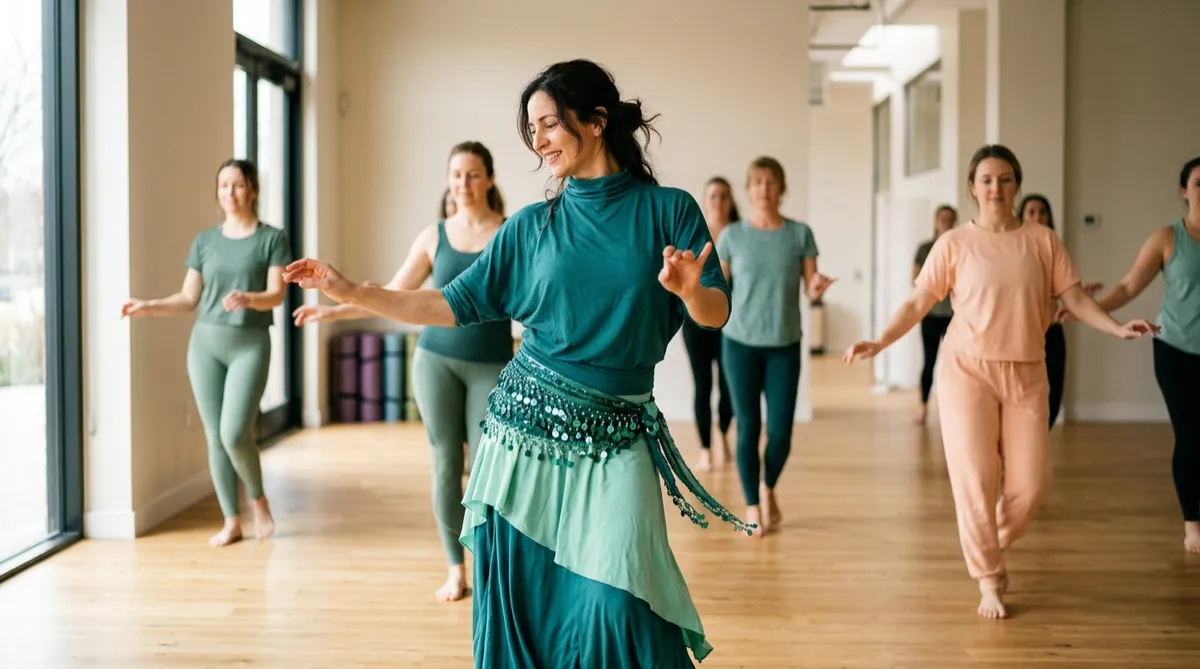
رقص شرقي ولياقة بالرقص: حركة ممتعة لجسم أكثر نشاطًا
لا تحتاجين إلى أن تكوني راقصة محترفة كي تستمتعي بالرقص الشرقي؛ يكفي أن تبدئي بخطوات بسيطة، ومساحة آمنة، ورغبة في الحركة. تجمع اللياقة بالرقص بين الموسيقى والتدرّج والمرح، فتمنحك طريقة عملية لإضافة النشاط إلى يومك من دون أن يبدو التمرين مهمة ثقيلة. ويمكن تكييف الحركات مع مستويات مختلفة، سواء كانت هذه أول تجربة لك أو كنتِ تبحثين عن نشاط جديد ينعش روتينك.

لماذا تختارين الرقص الشرقي كتمرين؟
الرقص الشرقي يدرّب الجسم على الحركة المنسّقة، لا على أداء حركة واحدة فقط. تساعد خطواته على إشراك عضلات الجذع، خصوصًا عندما تتعلمين تثبيت الجذع وتحريك الحوض باستقلالية. ومع الوقت قد تلاحظين تحسنًا في الإحساس بالتوازن والتحكم بالحركة، كما أن الانتباه إلى استقامة الظهر وارتخاء الكتفين يدعم وعيًا أفضل بالوضعية أثناء الرقص وفي الأنشطة اليومية. هذه فوائد تدريبية محتملة وليست وعودًا علاجية أو نتيجة مضمونة؛ فكل جسم يستجيب بطريقة مختلفة.
تحريك الوركين في اتجاهات متعددة يتيح تدريب المرونة ضمن مدى مريح، بينما ترفع المقاطع المتواصلة من الحركة نبض القلب وتزيد استهلاك الطاقة بحسب سرعة الرقص ومدته وشدته. لا توجد كمية ثابتة من السعرات تنطبق على الجميع؛ الوزن، والجهد، واللياقة، وفترات الراحة كلها عوامل مؤثرة. الأهم أن تختاري مستوى يناسبك وتزيدي وقتك أو شدتك تدريجيًا. كما أن الإيقاع والتعبير بالحركة قد يساعدان بعض الأشخاص على تخفيف التوتر والشعور بالبهجة والثقة، خصوصًا حين يكون التركيز على الاستمتاع بدل مقارنة النفس بالآخرين.
حركات البداية: خطوة خطوة
- إسقاط الورك: قفي مع ثني بسيط للركبتين، واجعلي الحركة صغيرة ومتحكَّمًا بها. ارفعي جهة من الحوض ثم دعيها تهبط بلطف، مع إبقاء الصدر مرتاحًا والقدمين ثابتتين. تعلّمي الجانبين قبل زيادة السرعة.
- شكل الرقم ثمانية: تخيّلي أن الحوض يرسم رقم ٨ أفقيًا. ابدئي بنقل الوزن قليلًا من قدم إلى أخرى، واتبعي مسارًا ناعمًا لا يسبب شدًا. ليس مطلوبًا أن يكون الشكل مثاليًا في أول مرة.
- الاهتزاز: يبدأ الشيمي غالبًا بحركة صغيرة وسريعة من الركبتين مع استرخاء الساقين، وليس بشد الظهر أو دفع الركبتين بقوة. تعلّمي الإيقاع ببطء، وخذي استراحة إذا شعرتِ بإجهاد.
- تموّجات الجذع: في التموجات، تخيّلي أن الحركة تمر بسلاسة عبر أجزاء الجذع. اكتفي بمدى مريح، ولا تضغطي على أسفل الظهر أو الرقبة لمحاولة صنع تموج أكبر.
يمكنك التدرب على حركة واحدة لدقائق قليلة، ثم إضافة انتقال بسيط بينها وبين حركة أخرى. التكرار الهادئ يبني الثقة؛ السرعة ليست معيار النجاح. استمعي إلى جسمك، واسمحي لنفسك بالعودة إلى الأساسيات كلما احتجتِ.
ماذا تتوقعين في الحصة؟
تبدأ الحصة الجيدة بإحماء تدريجي للمفاصل والعضلات، ثم مراجعة الوقفة والتنفس ونقل الوزن. بعد ذلك يشرح المدرب أو المدربة أساسيات الحركة، ويقسمها إلى أجزاء قصيرة قبل تركيبها مع الموسيقى. قد تتدربين على خطوات فردية، ثم تسلسل بسيط، ثم تكررينه بوتيرة مناسبة للمجموعة. توقعي أن تتفاوت الحركات بين التعلم البطيء ومقاطع أكثر نشاطًا، مع فترات للراحة وشرب الماء. لا يلزم أن تحفظي كل شيء فورًا؛ اتبعي الإرشادات، واسألي عن بديل أسهل إذا احتجتِ.

في الحصة الجماعية، لا يعني وجود مستويات مختلفة أن عليك مجاراة الجميع. ركزي على إتقان الأساسيات، وخذي مساحة مناسبة، واحترمي حدود الآخرين. إذا كان هناك خيار للمبتدئات، أخبري فريق التدريب بأنها تجربتك الأولى حتى يوضح التعديلات الملائمة. يمكن أن يكون الجو مرحًا وداعمًا، ولا توجد حاجة إلى ملابس خاصة أو خبرة سابقة للاستفادة من الحركة.
نصائح عملية للبدء بأمان
- اختاري ملابس مريحة تسمح بالحركة، وحذاءً مناسبًا أو تدربي حافية فقط إذا كانت أرضية المكان آمنة ومناسبة لذلك. أزيلي الأشياء التي قد تتعثرين بها.
- ابدئي بإحماء تدريجي، وأنهي الحركة بتهدئة بسيطة. لا تنتقلي مباشرة إلى الحركات السريعة أو العميقة.
- اشربي الماء قبل الحصة وبعدها، وخلالها بحسب حاجتك والطقس وشدة الجهد. لا تنتظري حتى تشعري بالعطش الشديد.
- اختاري تكرارًا واقعيًا، مثل حصة أسبوعية في البداية، ثم عدّلي الخطة بحسب راحتك ووقتك. الاستمرارية المرنة أنفع من خطة مرهقة يصعب الحفاظ عليها.
- خففي الحركة أو توقفي عند ألم حاد أو دوخة أو ضيق نفس غير معتاد. إذا كان لديكِ وضع صحي قائم أو قلق بشأن ملاءمة النشاط، استشيري طبيبًا قبل البدء.
حركة متوازنة ضمن أسلوب حياة صحي
يمكن أن تكون الحصة جزءًا ممتعًا من أسبوع متوازن، إلى جانب الراحة والنوم والحركة اليومية وخيارات الطعام التي تلائم احتياجاتك. لا يلزم أن تعتمدي على الرقص وحده، كما لا تحتاجين إلى اتباع قيود غذائية قاسية كي تشعري بالتقدم. اختاري أهدافًا قابلة للاستمرار، مثل تخصيص وقت للحركة، وملاحظة تحسن التنسيق أو النشاط، والاستمتاع بتعلم مهارة جديدة. في بروف هيلث نهتم بالخيارات الصحية العملية والمتوازنة؛ ويمكن للرقص أن يكمل نمطًا صحيًا يدعم العافية من دون مبالغة أو وعود سريعة.
امنحي نفسك مساحة للتعلم. قد تكون البداية متواضعة، لكن كل خطوة محسوبة وكل حصة فرصة لتتعرفي إلى جسمك بطريقة ألطف. ليس الهدف أن تبدو الحركة مثالية، بل أن تجدي نشاطًا تحبين العودة إليه.
باقات كلاسات الرقص الشرقي
إذا رغبتِ في التعلم ضمن أجواء مشجعة وخطة تناسب مستواك، تواصلي مع بروف هيلث عبر الموقع أو واتساب للاستفسار عن باقات كلاسات الرقص الشرقي واختيار ما يلائمك.
احجزي باقتك الآنتنبيه: المعلومات هنا عامة ولا تُعد نصيحة طبية. استشيري طبيبًا قبل بدء نشاط جديد إذا كان لديكِ مرض أو إصابة أو مخاوف صحية.
Oriental Dance and Dance Fitness: Enjoyable Movement for a More Active You
You do not need to be a professional dancer to enjoy oriental dance. A few simple steps, a safe space, and a willingness to move are enough to begin. Dance fitness brings music, gradual learning, and enjoyment together, making it a practical way to add activity to your week without making exercise feel like a chore. The movements can be adapted for different experience levels, whether this is your first class or you are looking for a fresh change to your routine.
Why choose oriental dance as a workout?
Oriental dance invites the body to coordinate many kinds of movement rather than repeat just one action. Its steps can engage the core, especially as you learn to keep the torso steady while moving the hips independently. With practice, you may become more aware of balance and control. Paying attention to a comfortable, upright posture and relaxed shoulders can also build awareness that carries into everyday movement. These are potential fitness benefits, not treatment claims or guaranteed outcomes; every body responds differently.
Moving the hips in several directions offers an opportunity to work on comfortable mobility and flexibility. Continuous dance sections can raise your heart rate and use energy, depending on the pace, duration, and effort. There is no single calorie figure that applies to everyone: body size, effort, fitness, and rest periods all matter. Choose an intensity that feels appropriate and build your time or effort gradually. Music and expressive movement may also help some people feel less tense, brighter, or more confident, particularly when the focus is enjoyment rather than comparing yourself with others.
Beginner moves, one step at a time
- Hip drops: Stand with softly bent knees and keep the movement small and controlled. Lift one side of the pelvis, then let it lower gently while keeping your chest relaxed and feet grounded. Learn both sides before adding speed.
- Figure-eight: Imagine your hips tracing a horizontal number eight. Begin with a modest weight shift from one foot to the other and follow a smooth path that does not create strain. The shape does not have to look perfect at first.
- Shimmy: A beginner shimmy often starts with a small, quick action through relaxed knees and legs, rather than a tense back or forceful knee motion. Learn the rhythm slowly and pause if you feel tired.
- Undulations: For a torso undulation, picture the movement flowing smoothly through the torso. Keep to a comfortable range, and do not press into your lower back or neck to make the wave bigger.
Practice one movement for a few minutes, then add a simple transition into another. Calm repetition builds confidence; speed is not the measure of success. Listen to your body and return to the basics whenever you need to.
What to expect in a class
A thoughtful class begins with a gradual warm-up for joints and muscles, followed by guidance on posture, breathing, and shifting your weight. The instructor then introduces the movement basics, breaking them into short pieces before putting them together with music. You may practice individual steps, combine them into a short sequence, and repeat it at a pace suitable for the group. Expect a mix of slower learning and livelier sections, with opportunities to rest and drink water. You do not need to memorize everything immediately; follow the guidance and ask for an easier variation when useful.
In a group class, different experience levels do not mean you have to keep up with everyone. Focus on learning the foundations, take a comfortable amount of space, and be considerate of others. If a beginner option is available, let the teaching team know this is your first visit so they can explain suitable modifications. The atmosphere can be playful and supportive, and special clothing or previous dance experience is not required to enjoy moving.
Practical tips for starting safely
- Choose comfortable clothes that allow movement and suitable footwear. Practice barefoot only if the floor is safe and appropriate. Clear anything you could trip over.
- Start with a gradual warm-up and finish with a gentle cool-down. Do not jump straight into fast or deep movements.
- Drink water before and after class, and during it according to your needs, the weather, and your effort. Do not wait until you are very thirsty.
- Choose a realistic rhythm, such as one class a week at first, then adjust according to comfort and schedule. Flexible consistency is more useful than an exhausting plan that is hard to maintain.
- Ease off or stop if you feel sharp pain, dizziness, or unusual shortness of breath. If you have an existing health condition or are unsure whether this activity is suitable, consult a doctor before starting.
Movement as part of a healthy lifestyle
A class can be an enjoyable part of a balanced week alongside rest, sleep, everyday movement, and food choices that fit your needs. You do not have to rely on dance alone, and you do not need restrictive eating rules to feel progress. Choose sustainable goals, such as making time to move, noticing better coordination or energy, and enjoying the process of learning a new skill. At بروف هيلث, we value practical, balanced healthy choices; dance can complement a healthy lifestyle that supports well-being without exaggerated promises or quick fixes.
Give yourself room to learn. Your first steps may be modest, but each one counts, and each class is a chance to get to know your body in a kinder way. The goal is not to make every movement look perfect; it is to find an activity you are happy to return to.
Oriental Dance Class Packages
If you would like to learn in an encouraging environment with a plan suited to your level, contact بروف هيلث through the website or WhatsApp to ask about Oriental Dance Class Packages and find an option that works for you.
Book Your Package NowNote: This information is general and is not medical advice. Consult a doctor before starting a new activity if you have a medical condition, injury, or health concern.